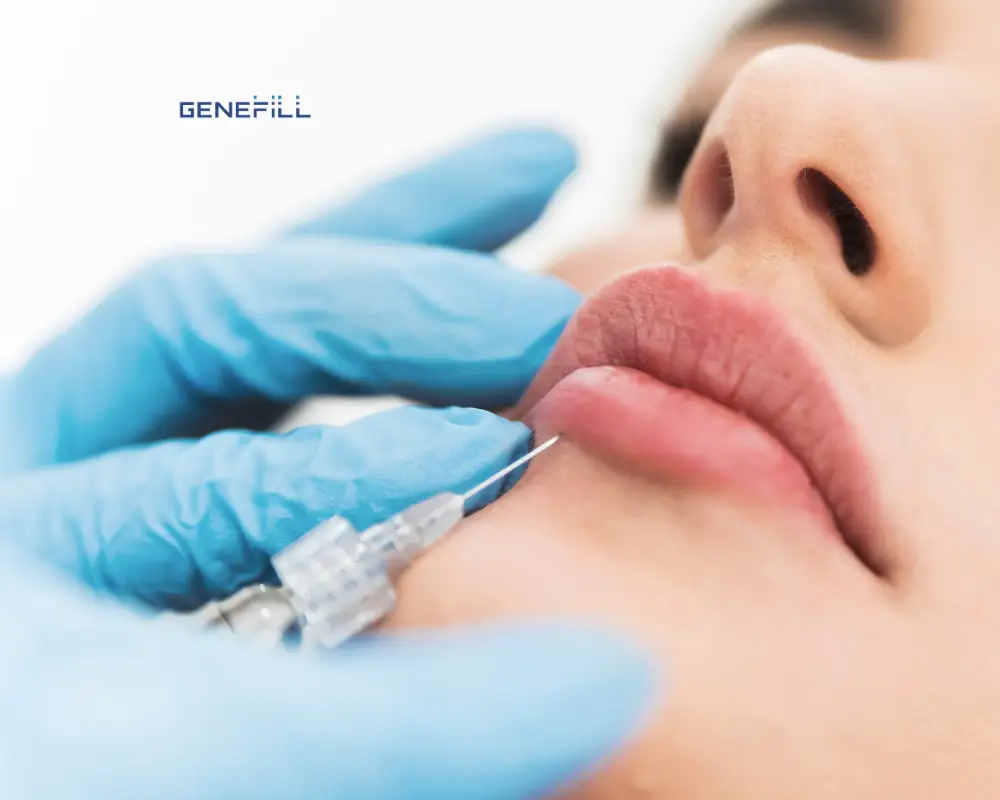
Working with a hybrid dermal filler involves understanding more than where and how to inject.
Product composition, treatment goals, facial anatomy, patient selection, skin quality, injection technique, and follow-up all influence how a treatment is planned. With hybrid formulations, practitioners also need to understand how different components contribute to the overall product profile.
This makes hybrid dermal filler training for doctors an important part of building a more complete understanding of modern facial aesthetics.
For practitioners interested in Genefill DX, structured education can help connect the science behind hyaluronic acid and Dextranomer with facial treatment planning and clinical application.
So, what should doctors understand when learning to work with a hybrid filler?
What Should Hybrid Dermal Filler Training for Doctors Cover?
A comprehensive dermal filler training course should connect product science with practical clinical decision-making.
Key areas include:
- Product composition and characteristics
- Science and mechanism of action
- Indications and treatment areas
- Facial assessment and treatment planning
- Injection techniques
- Patient selection
- Patient management and follow-up
- Clinical cases and results
These subjects are most useful when they are understood as parts of the same treatment journey.
Product science helps explain why a filler behaves the way it does. Facial assessment helps define the treatment objective. Technique then becomes part of a plan built around the patient's anatomy and goals.
For a hybrid filler such as Genefill DX, understanding these connections is particularly valuable because the conversation extends beyond volume alone.
What Is a Hybrid Dermal Filler?
A hybrid dermal filler combines components with different roles within one formulation.
Genefill DX combines cross-linked hyaluronic acid with Dextranomer microspheres.
Hyaluronic acid is widely used in aesthetic medicine for hydration and volume restoration, while the Dextranomer component introduces a biostimulatory element to the formulation.
This combination places Genefill DX within a broader category of aesthetic treatments where volume, facial structure, skin quality, and biostimulation can be considered together.
Working with a hybrid filler starts with understanding what each component contributes and how those properties relate to the intended treatment.
Why Does Product Science Matter When Working With Genefill DX?
Understanding product science helps practitioners connect the properties of a filler with its clinical application.
With Genefill DX, that means looking at both sides of the hybrid formulation.
The hyaluronic acid component contributes to the structural and volumising role associated with HA fillers, while Dextranomer microspheres are linked to the product's biostimulatory profile.
Research into the formulation has also examined markers associated with collagen, elastin, hydration, fibroblast activity, and extracellular matrix response in vitro. These findings contribute to the wider scientific discussion around hybrid fillers and skin quality.
The relationship between collagen, elastin, skin quality, and Genefill DX is explored in more detail in the Genefill DX in vitro study.
Understanding this scientific background gives greater context to the product rather than reducing treatment planning to injection technique alone.
Why Are Skin Quality and Biostimulation Important in Facial Aesthetics?
Modern facial rejuvenation increasingly considers more than volume.
A patient's aesthetic goals may include:
- Restoring volume
- Improving facial definition
- Supporting facial contours
- Maintaining natural proportions
- Improving the appearance of skin quality
- Achieving a refreshed rather than overcorrected result
This wider perspective has increased interest in biostimulation and hybrid fillers.
Skin quality itself can involve several characteristics, including hydration, smoothness, elasticity, firmness, and overall appearance. These factors sit alongside facial volume and structure rather than replacing them.
Understanding this distinction helps clarify how different treatment goals relate to volume, facial structure, and skin quality.
The question is no longer simply:
“Where is volume needed?”
It may also be:
“What combination of structural and skin-quality goals is being considered for this patient?”
That broader way of thinking is central to understanding hybrid facial rejuvenation.
How Does Genefill DX Fit Into Hybrid Biostimulation?
Hybrid biostimulation describes an approach in which structural or volumetric correction and biostimulatory activity are considered within the same treatment concept.
Genefill DX combines cross-linked HA with Dextranomer microspheres, bringing these two aspects together within one formulation.
This does not mean every patient requires the same treatment plan.
Instead, product knowledge helps practitioners understand where Genefill DX may fit within a personalised facial aesthetic strategy based on the patient's anatomy, priorities, and treatment goals.
The wider concept of hybrid biostimulation — including its relationship with volume and skin quality — is explored further in the Genefill guide to hybrid biostimulation and modern facial rejuvenation.
Why Does Facial Assessment Matter Before Choosing an Injection Technique?
Injection technique should follow assessment, not replace it.
Areas such as the cheeks, chin, and jawline contribute differently to overall facial balance. Changes in one area can influence how surrounding features are perceived, which makes facial assessment an important part of treatment planning.
A practitioner may need to consider:
- Existing facial proportions
- Volume distribution
- Areas of structural support
- Symmetry
- The patient's aesthetic priorities
- The degree of correction being considered
- How individual features relate to the face as a whole
This is where facial harmony becomes relevant.
Rather than treating one feature in isolation, a practitioner can consider how a planned correction contributes to the patient's overall appearance.
Understanding the product, anatomy, and treatment objective together provides the foundation for selecting an appropriate technique.
What Should Doctors Learn About Genefill DX Injection Techniques?
Injection technique is an important part of Genefill DX training, but technique has greater value when practitioners understand the decisions surrounding it.
These can include:
- Treatment area
- Patient anatomy
- Product characteristics
- Planned correction
- Placement strategy
- Overall facial proportions
- Treatment goals
- Patient expectations
Two patients interested in facial contouring may have completely different starting anatomy and priorities.
A standardised technique cannot replace individual assessment.
Structured training can instead help practitioners understand how technique fits within a broader clinical plan and why different treatment decisions may be appropriate for different patients.
Continue Learning With the Genefill DX Masterclass
Practitioners looking to deepen their understanding of Genefill DX can explore the Genefill DX Masterclass on the BioScience Digital Academy.
The course connects product science, indications, treatment areas, injection techniques, patient management, and clinical cases within one structured learning pathway.
Explore the Genefill DX Masterclass and continue your hybrid filler education.
Why Is Patient Selection Important in Facial Filler Treatment Planning?
Patient selection helps connect what a patient requests with what may be appropriate for their individual facial anatomy and goals.
Someone may ask for “more definition,” for example, without necessarily knowing whether their priority relates to the cheeks, chin, jawline, overall balance, or volume distribution.
Others may arrive asking specifically for a particular product because they have heard terms such as hybrid filler, biostimulation, or collagen stimulation.
A consultation allows the practitioner to move beyond those terms and understand what the patient actually wants to achieve.
Good facial filler education should therefore include:
- Patient assessment
- Aesthetic goal setting
- Expectation management
- Treatment planning
- Product selection
- Follow-up
This helps place the product within a patient-specific strategy rather than beginning with a predetermined procedure.
Why Should Dermal Filler Training Include Patient Management and Follow-Up?
Treatment does not end when the injection is complete.
Patient management includes explaining what to expect, providing appropriate aftercare guidance, answering questions, and reviewing the result when required.
Follow-up can also help the practitioner assess how the treatment has settled and whether the original aesthetic goals have been addressed.
The specific approach will vary according to the patient and treatment plan, but the broader principle remains consistent: good facial filler treatment planning includes the complete patient journey.
That is why patient management and follow-up deserve dedicated attention within aesthetic medicine training.
Why Are Clinical Cases Important When Learning About Hybrid Fillers?
Clinical cases help turn individual pieces of knowledge into practical decision-making.
A case may demonstrate:
- The patient's starting anatomy
- Their aesthetic goals
- Why Genefill DX was selected
- Which areas were considered
- How the treatment was planned
- Which technique was used
- How the result was assessed
This allows practitioners to see how product science, facial assessment, injection technique, and patient management connect in practice.
Case-based education is especially useful with hybrid fillers because it helps translate concepts such as biostimulation and skin quality into the broader context of facial treatment planning.
Rather than presenting one universal treatment formula, clinical cases demonstrate how the same product knowledge can inform different patient-specific decisions.
How Can Doctors Build a More Complete Understanding of Hybrid Fillers?
A complete learning pathway connects product science, indications, facial assessment, treatment planning, injection technique, patient management, and clinical application.
With Genefill DX, that means connecting the science of hyaluronic acid and Dextranomer with treatment areas, facial goals, and real clinical cases.
What Is the Genefill DX Masterclass?
The Genefill DX Masterclass is an online course available through the BioScience Digital Academy, designed to provide structured education around Genefill DX and its application in facial aesthetics.
The course includes six lessons:
- Product Introduction
- Science & Mechanism of Action
- Indications & Treatment Areas
- Injection Techniques
- Patient Management & Follow-up
- Clinical Cases & Results
The programme concludes with a final assessment, bringing the main areas of learning together at the end of the course.
Practitioners who complete the programme can also receive a course certificate through the BioScience Digital Academy.
Rather than focusing only on how Genefill DX is injected, the Masterclass follows a broader learning pathway from product science and mechanism of action through to clinical application.
Frequently Asked Questions About Genefill DX Training
What is the Genefill DX Masterclass?
The Genefill DX Masterclass is an online educational course for medical professionals covering the Genefill DX hybrid dermal filler, including product science, mechanism of action, indications, treatment areas, injection techniques, patient management, and clinical cases.
Who is the Genefill DX Masterclass designed for?
The course is designed for medical professionals looking to develop or strengthen their understanding of hybrid dermal fillers, biostimulation, Genefill DX, and facial aesthetic treatment planning.
What does the Genefill DX Masterclass cover?
The course includes six lessons covering product introduction, science and mechanism of action, indications and treatment areas, injection techniques, patient management and follow-up, and clinical cases and results. A final assessment follows the six lessons.
What is a hybrid dermal filler?
A hybrid dermal filler combines components with different roles within one formulation. Genefill DX combines cross-linked hyaluronic acid with Dextranomer microspheres, bringing volumetric and biostimulatory considerations together within one product.
What is the difference between Genefill DX and a traditional HA filler?
Genefill DX combines cross-linked hyaluronic acid with Dextranomer microspheres. This hybrid composition differs from fillers based solely on hyaluronic acid and allows both structural correction and biostimulation to be considered within the product's aesthetic profile.
Does the Genefill DX Masterclass include injection techniques?
Yes. Injection Techniques is one of the six dedicated lessons in the Genefill DX Masterclass. The programme also covers product science, indications, patient management, and clinical cases to place technique within a broader treatment framework.
Does the Genefill DX Masterclass include clinical cases?
Yes. A dedicated Clinical Cases & Results lesson helps connect product knowledge, treatment planning, and injection principles with practical facial aesthetic cases.
Does the Genefill DX Masterclass provide a certificate?
The BioScience Digital Academy provides a certificate following completion of the Genefill DX Masterclass and its assessment.
Where can doctors take the Genefill DX Masterclass?
The Genefill DX Masterclass is available online through the BioScience Digital Academy, where practitioners can access the six course lessons and final assessment.
Why is structured education useful when learning about hybrid fillers?
Hybrid filler education involves more than injection technique. Structured training helps practitioners connect product composition, mechanism of action, treatment indications, facial assessment, injection technique, patient management, and clinical cases within one learning pathway.
Continue Your Genefill DX Education
Understanding a hybrid filler means understanding more than how it is injected.
Product composition, mechanism of action, facial anatomy, patient goals, treatment planning, and follow-up all contribute to how Genefill DX is used within aesthetic practice.
The Genefill DX Masterclass brings these areas together in one structured online course, from the science of hyaluronic acid and Dextranomer through to indications, injection techniques, patient management, and clinical cases.
Ready to deepen your understanding of hybrid fillers? Explore the Genefill DX Masterclass on the BioScience Digital Academy and enroll in the course.