



Facial ageing rarely involves just one change. Over time, the skin can experience reduced hydration, loss of volume and changes in the collagen and elastin that contribute to its structure and elasticity.
Addressing these changes has traditionally meant choosing treatments according to a single primary objective: restore volume, improve hydration or stimulate the skin.
But what if one injectable could approach facial rejuvenation in more than one way?
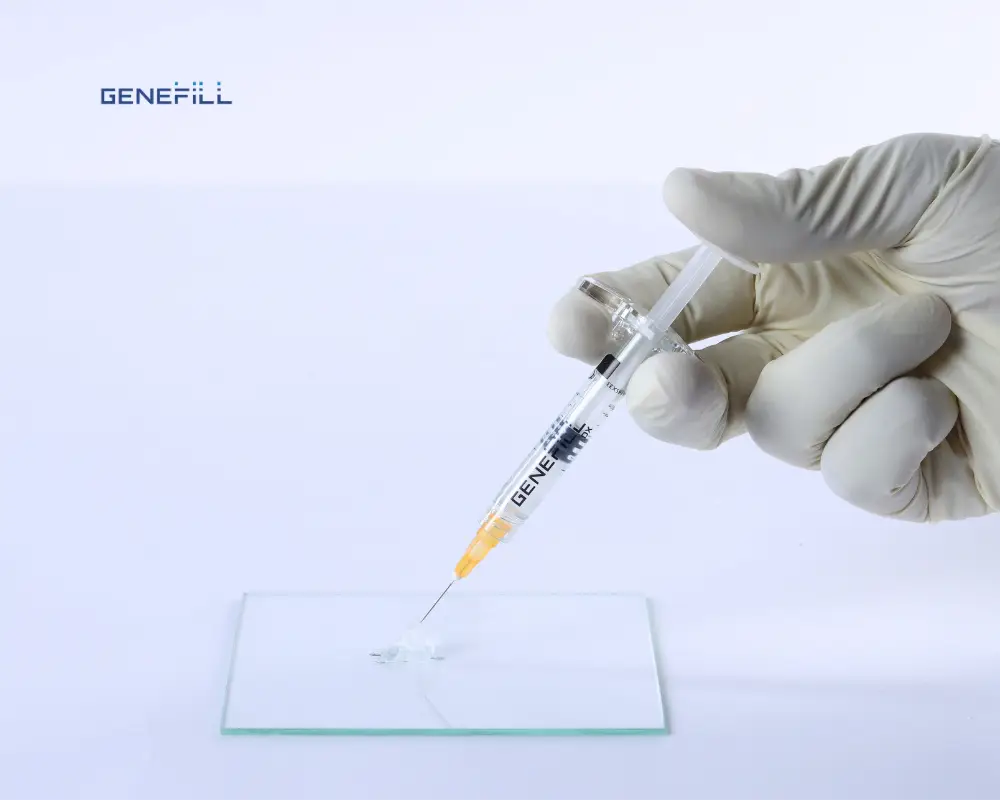
Genefill DX is a hybrid dermal filler that combines cross-linked hyaluronic acid with Dextranomer microparticles to deliver a triple-action approach: hydration, volumization and biostimulation.
This combination brings together the established hydrating and volumizing properties of hyaluronic acid with the biostimulatory role of Dextranomer, creating a multi-dimensional approach to facial rejuvenation.
And there is science behind that mechanism.
An in vitro study published in Aesthetic Plastic Surgery investigated Genefill DX and evaluated its effects on hydration, collagen and elastin production, fibroblast migration, cytokine activity and other markers associated with extracellular matrix regeneration.
So, what exactly does triple action mean — and what did the research find?
What Is Genefill DX?
Genefill DX is a hybrid dermal filler formulated with two key components: Cross-linked hyaluronic acid (HA) and Dextranomer microparticles (DX).
Hyaluronic acid is widely used in aesthetic medicine for its hydrating and volumizing properties. Genefill DX contains cross-linked HA at a concentration of 14 mg/mL, providing the gel component responsible for hydration and volume restoration.
Dextranomer introduces the second dimension. It’s a biodegradable, hydrophilic glucose-derived polymer composed of cross-linked dextran molecules. In Genefill DX, Dextranomer microparticles are incorporated at a concentration of 50 mg/mL.
Together, these components create a hybrid formulation designed to combine the immediate aesthetic properties associated with HA with biostimulation and extracellular matrix regeneration.
This is the foundation of Genefill DX's three complementary actions.
The Triple Action of Genefill DX
Rather than looking at facial rejuvenation through a single mechanism, Genefill DX brings together three:
1. Hydration
Hyaluronic acid has a strong affinity for water, making hydration an important part of the Genefill DX formulation.
The in vitro study assessed this directly by measuring water content in cells treated with HA + DX and an HA-only filler over 24, 48, and 72 hours.
The HA-only filler produced greater cellular hydration during the earlier stages of the experiment. However, the difference between the HA and HA + DX groups was no longer significant at 72 hours, and the researchers described the hydration associated with HA + DX as becoming more stable and sustained over time.
The physicochemical analysis also found a swelling factor of 121%, demonstrating the formulation's capacity to retain moisture.
These findings provide laboratory evidence for hydration as one component of Genefill DX's broader mechanism of action.
But hydration is only the beginning.
2. Volumization
The second action comes from cross-linked hyaluronic acid.
HA fillers are widely used to restore volume within facial tissues and provide structural support in areas affected by volume loss. Genefill DX is indicated for volume restoration and facial tissue augmentation, combining this volumizing role with its additional Dextranomer component.
The study also examined the rheological characteristics of the HA + DX formulation.
Researchers found that it demonstrated a dynamic viscoelastic profile, with predominantly elastic behaviour at higher frequencies and increased viscous behaviour at lower frequencies.
Why does that matter?
The way a filler responds to different forces is an important part of how it behaves within dynamic facial tissues. The study concluded that the HA + DX formulation had a balanced elastic and viscous profile, supporting structural integrity and adaptability in dynamic facial areas.
This provides an important physical foundation for the volumizing component of Genefill DX.
The third action, however, is what makes the hybrid formulation particularly distinctive.
3. Biostimulation
Alongside HA, Genefill DX contains Dextranomer microparticles, which introduce a biostimulatory mechanism.
Biostimulation refers to stimulating biological processes associated with the production and renewal of components within the skin's extracellular matrix.
The 2025 in vitro study provides particularly interesting evidence in this area.
Researchers evaluated the production of several types of collagen as well as elastin in normal human dermal fibroblasts exposed to HA + DX.
The results showed that HA + DX significantly stimulated the production of collagen types I, III, IV and VI, as well as elastin, across the study's measured time points.
This matters because collagen is not one single structure with one single function. Different collagen types contribute to different aspects of the extracellular matrix, while elastin plays an important role in tissue elasticity.
These findings form the basis of Genefill DX's biostimulatory action. But looking more closely at the individual markers reveals a broader picture of how the HA + DX formulation behaved in vitro.
What Did the Genefill DX In Vitro Study Investigate?
The study was designed to characterize the physicochemical and rheological properties of the HA + DX filler and investigate its cellular and molecular effects.
Researchers conducted in vitro experiments using normal human dermal fibroblasts and monocytes.
The investigation included assessments of:
- Collagen production
- Elastin production
- Cellular hydration
- Fibroblast migration
- Wound closure in a scratch assay
- Cytokine modulation
- Rheological properties
The HA + DX formulation was also evaluated alongside other commercially available filler materials within parts of the experimental research.
Because this was an in vitro study, these findings describe biological activity observed under controlled laboratory conditions. They should not be interpreted as direct evidence that the same magnitude or timeline of response will occur in patients.
However, they provide valuable insight into how the components of this hyaluronic acid and Dextranomer hybrid filler may interact with processes involved in extracellular matrix regeneration.
Beyond Collagen: What Did the Study Find About Elastin?
Collagen often receives most of the attention when discussing biostimulatory fillers, but the study also investigated elastin.
Elastin is an extracellular matrix protein associated with the skin's ability to stretch and return to its original form.
In the study, HA + DX significantly promoted elastin production in fibroblasts beginning at 24 hours, with the effect maintained across the measured time points.
The HA-only filler evaluated in this part of the experiment did not produce a significant increase in elastin at the measured time points.
This adds another layer to the biostimulatory profile observed with HA + DX: the laboratory findings were not limited to collagen synthesis alone.
Genefill DX and Collagen Types I, III, IV and VI
One of the most interesting aspects of the study is the range of collagen types investigated.
Collagen Type I is a major structural collagen within the skin. HA + DX significantly increased its production at 24, 48 and 72 hours compared with the untreated control.
Collagen Type III is also associated with the extracellular matrix and is often found alongside Type I collagen. HA + DX produced a significant increase at 24 hours in the reported results.
Collagen Type IV is an important component of basement membranes. The HA + DX formulation stimulated a sustained increase in Type IV collagen levels through 72 hours.
Collagen Type VI contributes to the organization of the extracellular matrix. Both HA and HA + DX increased its production, with the response reported as more pronounced and sustained with HA + DX.
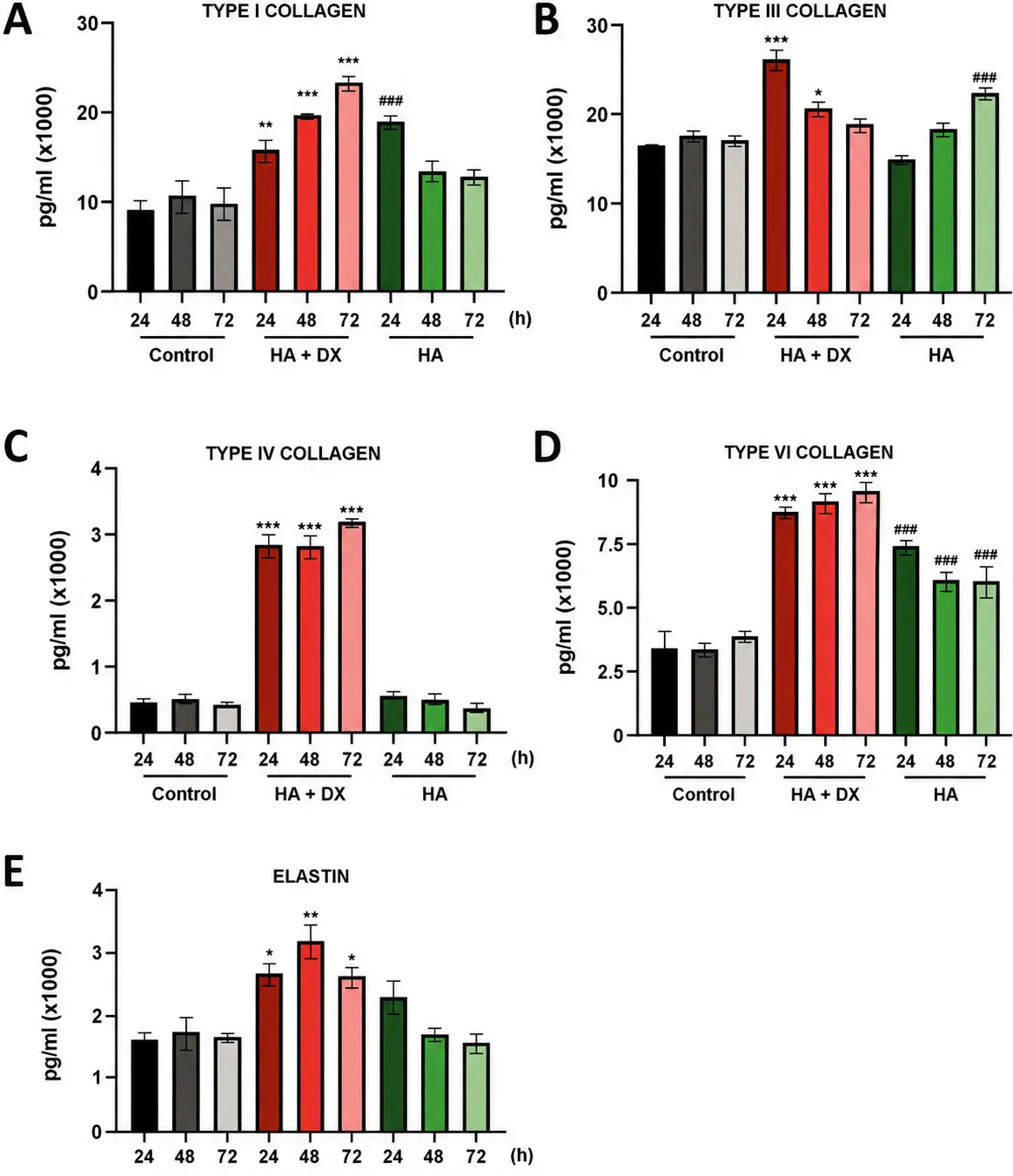
Together, these findings demonstrate that the observed biostimulatory activity was not limited to a single collagen type.
What Did the Study Find About Tissue Regeneration?
Another important part of the research looked at fibroblast migration using a laboratory scratch assay.
Fibroblasts play an essential role within connective tissue and extracellular matrix production. Their migration is one of the processes involved in tissue repair.
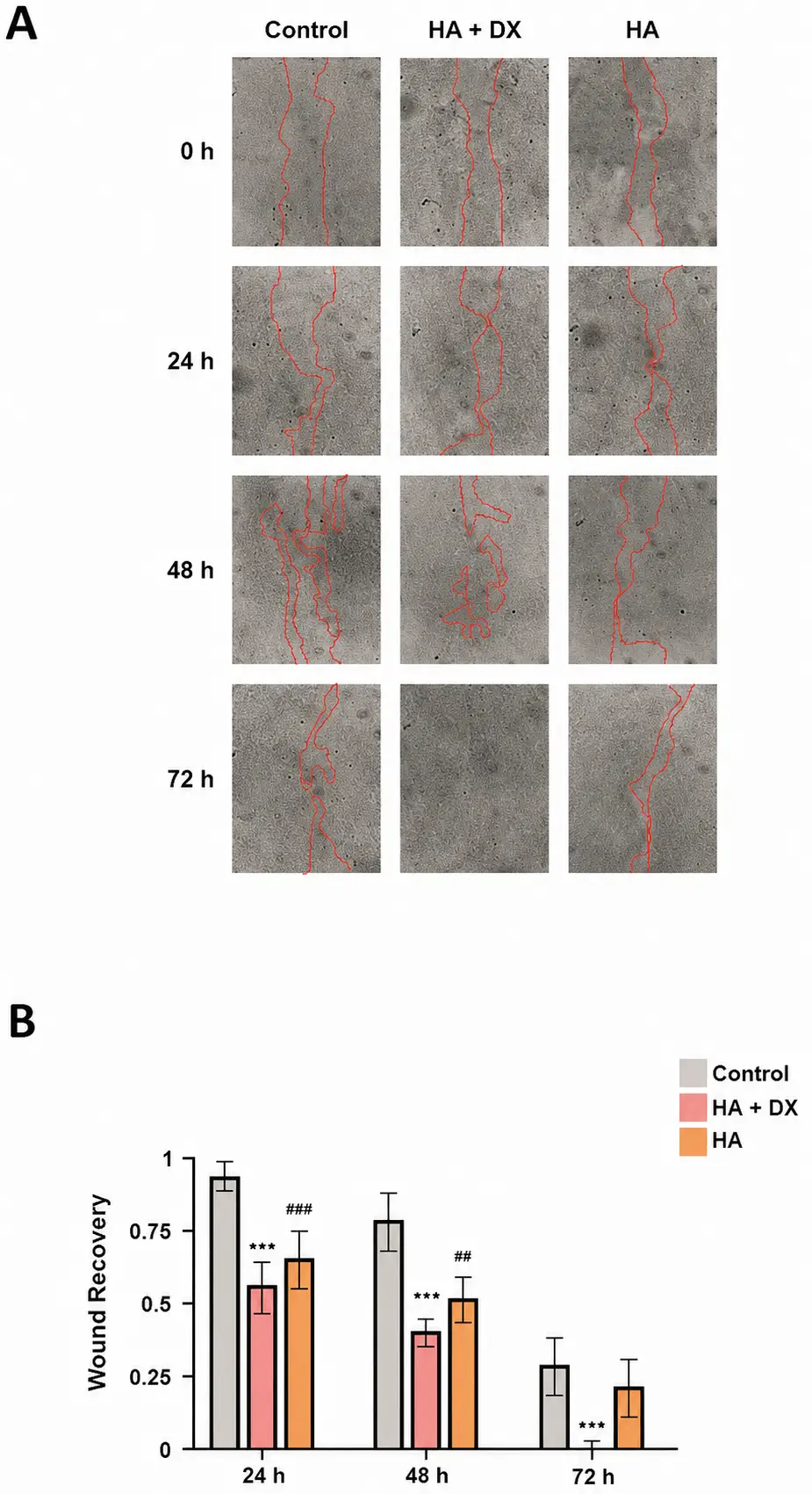
At 24 hours, both HA and HA + DX showed significant improvements in wound closure compared with the untreated control, with no significant difference between the two filler groups at that stage.
By 48 hours, the HA + DX group showed greater wound closure than the HA group.
At 72 hours, the scratch area treated with HA + DX had achieved complete closure in the in vitro model, while the HA group showed a slower progression.
These findings led the researchers to identify enhanced fibroblast migration and wound healing among the regenerative effects observed with HA + DX.
Importantly, “wound healing” here refers to the laboratory scratch assay used in the study. It should not be interpreted as a claim that Genefill DX clinically treats wounds in patients.
Cytokine Modulation: Another Part of the Regenerative Picture
The researchers went even further by investigating cytokines involved in cellular signalling.
HA + DX influenced several of the biomarkers measured, including TGF-β1, IL-10, IL-6, TNFα and IL-1β.
Among the reported findings, HA + DX increased TGF-β1 and IL-10 in the experimental models while reducing certain pro-inflammatory markers at specific time points.
TGF-β1 is particularly relevant to extracellular matrix biology and fibroblast activity, while cytokines such as IL-10 are involved in regulating inflammatory responses.
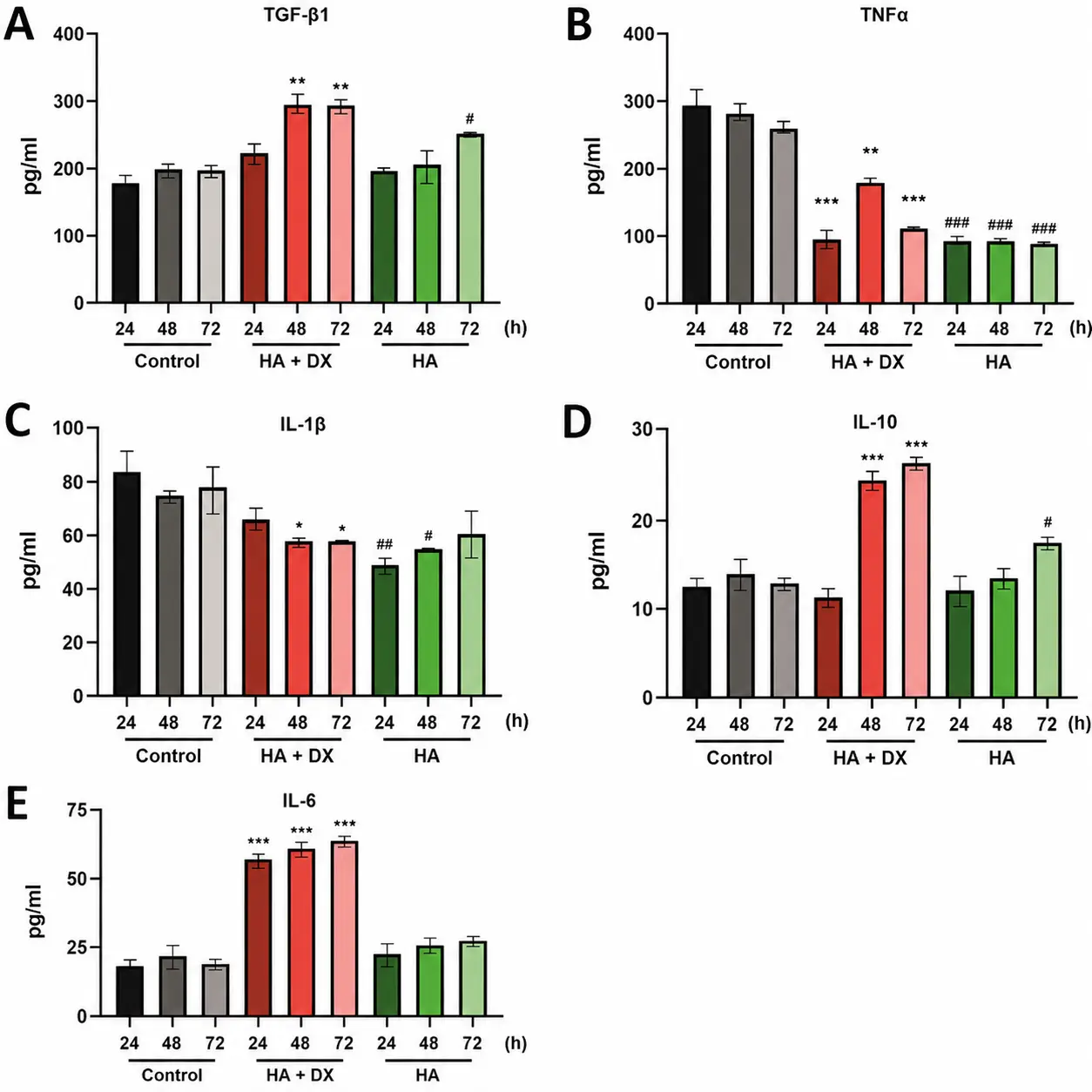
The researchers concluded that the cytokine profile observed with HA + DX suggested regenerative and anti-inflammatory potential within the experimental model.
Again, this distinction matters: these are mechanistic laboratory findings rather than evidence that Genefill DX should be used as an anti-inflammatory treatment.
Why Combine Hyaluronic Acid With a Biostimulator?
The concept behind a hybrid dermal filler is not simply to place two ingredients in the same syringe. It is to combine mechanisms that address different aspects of facial rejuvenation.
With Genefill DX:
- HA provides hydration and volumization.
- Dextranomer provides biostimulatory activity associated with collagen, elastin, and extracellular matrix regeneration.
This creates a treatment approach that considers both the immediate aesthetic role of a dermal filler and biological processes that develop beyond volume replacement alone.
The in vitro findings are particularly relevant because they help demonstrate that the Dextranomer-containing formulation exhibits measurable biological activity in fibroblast and cellular models.
READ THE FULL STUDY HERE: Enhanced Facial Rejuvenation: Biostimulatory Effects of Genefill DX on Collagen Synthesis and Tissue Regeneration
Where Can Genefill DX Be Used?
Genefill DX is designed for facial tissue augmentation and can be used in areas including:
- Cheeks
- Nasolabial folds
- Marionette lines
- Jawline
- Chin
The appropriate indication, injection technique, depth, and amount of product should always be determined by a qualified medical professional based on the patient's individual anatomy and aesthetic goals.
Genefill DX can provide results for up to 12 months, although individual duration may vary depending on factors such as the amount of product used and the depth and area of injection.
From Immediate Correction to Biological Activity
The evolution of aesthetic medicine is increasingly moving beyond treating individual signs of ageing in isolation.
Volume and hydration both matter, but so do the biological processes that contribute to the quality and structure of facial tissues.
Genefill DX brings these dimensions together through a hybrid formulation combining cross-linked hyaluronic acid with Dextranomer microparticles.
What makes that story particularly relevant is that the mechanism is now supported by published laboratory research demonstrating effects across multiple biological markers — from collagen types I, III, IV and VI and elastin to fibroblast migration, hydration and cytokine modulation.
The study does not replace the need for clinical evidence, nor should in vitro results be interpreted as guaranteed patient outcomes. Instead, it provides a scientific foundation for understanding how Genefill DX works and why its triple-action formulation is different from conventional volumization alone.
For aesthetic practitioners, that creates an opportunity to think about facial rejuvenation through a broader lens: not simply adding volume, but selecting products according to the different structural and biological needs of the tissue.
Want to learn more about the science behind Genefill DX and its hybrid approach to facial rejuvenation? Contact us to learn more about Genefill DX and connect with the appropriate team in your country.
Frequently Asked Questions About Genefill DX
What is the triple action of Genefill DX?
Genefill DX combines three complementary actions: hydration, volumization and biostimulation. Its cross-linked hyaluronic acid provides hydration and volume, while Dextranomer microparticles provide a biostimulatory mechanism associated with collagen, elastin and extracellular matrix regeneration.
Is Genefill DX a hybrid dermal filler?
Yes. Genefill DX is a hybrid dermal filler combining cross-linked hyaluronic acid with Dextranomer microparticles. This allows it to combine the hydrating and volumizing properties of HA with the biostimulatory activity of Dextranomer.
What does the Genefill DX in vitro study show?
The study found that HA + DX demonstrated biological activity associated with collagen and elastin production, fibroblast migration, hydration, and cytokine modulation under laboratory conditions. It also demonstrated a dynamic viscoelastic profile. Because the research was conducted in vitro, these findings should not be interpreted as direct clinical outcomes in patients.
Does Genefill DX stimulate collagen?
In the in vitro study, HA + DX significantly stimulated the production of collagen types I, III, IV and VI in normal human dermal fibroblasts at measured time points. These findings demonstrate collagen-related biostimulatory activity under the laboratory conditions studied.
Does Genefill DX stimulate elastin?
Yes, in vitro. The study found that HA + DX significantly promoted elastin production in normal human dermal fibroblasts beginning at 24 hours, with the effect maintained across the measured time points.
How do hyaluronic acid and Dextranomer work together in Genefill DX?
The two components provide complementary functions. Cross-linked hyaluronic acid contributes hydration and volumization, while Dextranomer microspheres introduce a biostimulatory mechanism associated with collagen and elastin production and extracellular matrix regeneration.
Does Genefill DX provide hydration?
Yes. Hyaluronic acid provides the hydrating component of Genefill DX. In vitro testing also demonstrated water retention with HA + DX, with the study describing its hydration levels as becoming more stable and sustained over time.
What is Dextranomer in dermal fillers?
Dextranomer is a biodegradable, hydrophilic glucose polymer composed of cross-linked dextran molecules. In Genefill DX, Dextranomer microparticles are combined with cross-linked hyaluronic acid to provide a biostimulatory component alongside HA-based hydration and volumization.
How long does Genefill DX last?
Genefill DX can provide results for up to 12 months. Individual results may vary depending on factors including the amount of product used and the depth and area of injection.
Where can Genefill DX be used?
Genefill DX is designed for facial tissue augmentation and can be used in areas including the cheeks, nasolabial folds, marionette lines, jawline and chin. Treatment suitability should be assessed individually by a qualified medical professional.
Is Genefill DX a collagen booster?
Genefill DX is a hybrid dermal filler with biostimulatory properties. In vitro research demonstrated stimulation of collagen types I, III, IV and VI as well as elastin. “Biostimulatory hybrid filler” is a more precise description than treating it simply as a collagen booster.

.webp)
