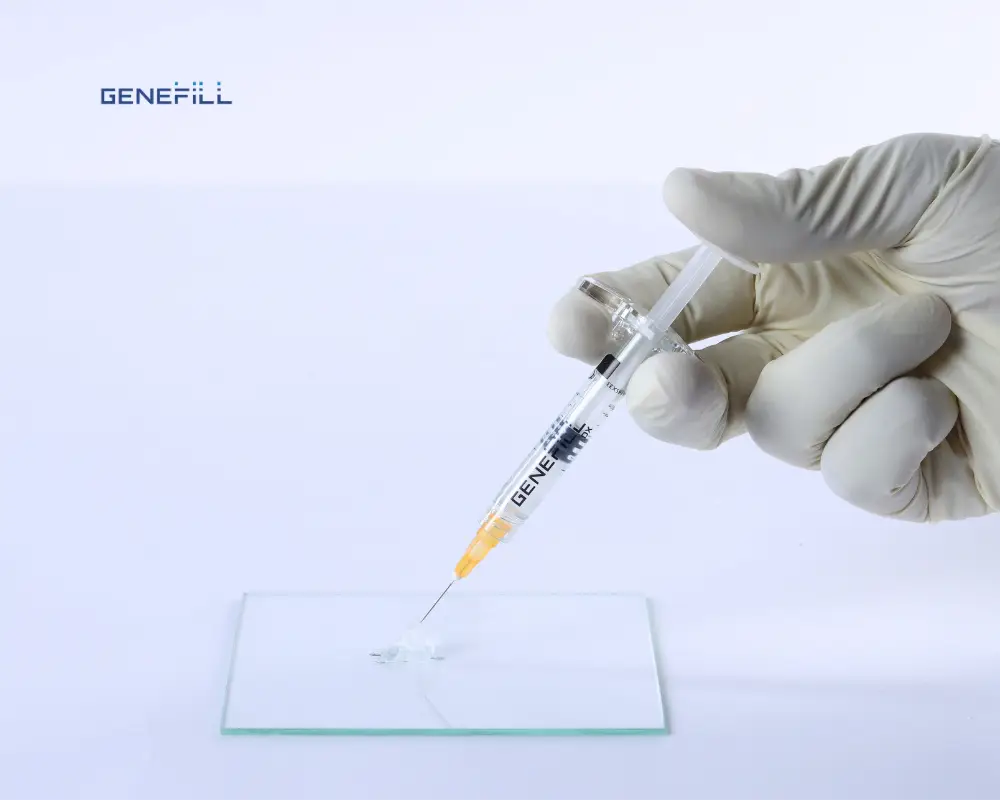


When you are happy with your filler results, it is only natural to want to maintain them for as long as possible. And while hyaluronic acid fillers are temporary by design, there are several factors that can influence how your results look and evolve over time.
Some of these are individual, such as your metabolism and facial movement. Others come down to the treatment itself, including the product selected, the area treated and injection technique. Then there are the things you can control: your aftercare, skincare habits, sun protection and how you approach ongoing filler maintenance.
So, how can you make dermal fillers last longer?
There is no single trick that can guarantee a specific duration. Instead, getting the most from your results comes down to a combination of choosing the right filler from the beginning, following appropriate aftercare, and supporting your skin over time.
Why Does Filler Longevity Vary?
Hyaluronic acid, commonly known as HA, is naturally present in the human body. In aesthetic medicine, specially formulated HA gels can be injected into selected facial areas to restore volume, refine contours, smooth lines, or improve skin quality, depending on the product and indication.
HA fillers are biodegradable, meaning the material is gradually broken down by the body over time. But not every filler (or every patient) follows the same timeline.
Several factors can influence dermal filler longevity, including:
- Product formulation
- Degree of HA cross-linking
- Area being treated
- Injection depth and technique
- Amount of product used
- Facial movement
- Individual metabolic and biological factors
This is why the same filler may not last for exactly the same amount of time in every person or every facial area.
It also means that prolonging filler results starts before aftercare even begins. Product selection, treatment planning, and appropriate placement provide the foundation; what you do afterwards helps support those results.
How Can You Help Your Dermal Fillers Last?
Once your filler has been selected and injected appropriately, there are several practical ways to care for your skin and results.
1. Follow Your Dermal Filler Aftercare Instructions
Good dermal filler aftercare begins immediately after your appointment.
Your practitioner may provide specific instructions regarding exercise, heat exposure, pressure on the treated area, skincare, and other activities during the initial post-treatment period.
These recommendations can vary depending on the area injected, product used and technique performed. This is why the instructions provided specifically for you should always take priority over generic aftercare advice found online.
Avoid manipulating or massaging the treated area unless your practitioner specifically advises you to do so, and contact them if you experience anything that concerns you following your procedure.
The aim is not to create a complicated aftercare routine, but to give the treated area the appropriate conditions during the initial period.
2. Protect Your Skin From Excessive UV Exposure
Sun protection is an important part of maintaining overall skin quality, with or without fillers.
Repeated UV exposure contributes to photoageing and changes within the skin, including collagen and elastin degradation. Over time, these changes can affect the overall quality and appearance of the skin surrounding your filler results.
Use an appropriate broad-spectrum sunscreen, seek shade during periods of high UV exposure, and consider physical protection such as a hat when spending extended periods outdoors.
Rather than thinking of sunscreen as a way to directly stop filler from breaking down, consider it an important part of maintaining healthy-looking skin around your aesthetic results.
3. Maintain a Consistent Skincare Routine
The best skincare routine after facial fillers does not necessarily need to be the most complicated one.
Once your practitioner has advised that you can resume your normal skincare, focus on consistency and products appropriate for your individual skin needs.
A routine that focuses on cleansing, hydration, the skin barrier and sun protection can help maintain healthy-looking skin. Additional products or active ingredients can then be selected according to your skin type and concerns.
Skincare and dermal fillers have different roles. Topical skincare helps maintain the overall quality of the skin, while fillers work within specific tissue layers to address indications such as volume, contour, wrinkles or hydration.
Together, they can form complementary parts of a broader approach to facial aesthetics.
4. Support Your Skin From Within
Healthy-looking skin is also influenced by your overall lifestyle.
Adequate hydration, a balanced lifestyle, and general skin-health habits can contribute to how your skin looks and feels.
Because hyaluronic acid is known for its ability to bind water, hydration is frequently discussed in relation to HA fillers. However, drinking excessive amounts of water will not make filler last indefinitely.
Hydration should instead be viewed as part of your overall skincare and wellbeing rather than a shortcut for extending filler longevity.
The same principle applies more broadly: there is no single food, supplement or lifestyle “hack” that can guarantee longer-lasting filler results.
5. Be Mindful of Factors That Affect Skin Quality
When considering how lifestyle affects hyaluronic acid fillers, it is useful to separate filler longevity from overall skin ageing.
Factors such as smoking and chronic UV exposure can negatively affect skin quality over time. Meanwhile, areas of the face that experience frequent movement may naturally show changes in filler results differently from areas that move less.
This does not mean you should restrict your facial expressions or change the way you naturally move your face.
Your face is dynamic. Smiling, talking, and expressing yourself are part of everyday life.
Instead, focus on the factors you can reasonably control: good skincare, appropriate sun protection, aftercare and regular assessment of your results.
6. Give Your Results Time to Settle
Immediately after receiving facial fillers, temporary swelling, redness, tenderness or other short-term post-injection effects may influence how the treated area initially appears.
This means the result you see immediately after your appointment may not represent the settled outcome.
Allow the appropriate amount of time recommended by your practitioner before assessing your results or deciding whether further correction is necessary.
Follow-up appointments can be useful for reviewing the area once the initial post-treatment effects have subsided and assessing how the result is developing.
Good filler maintenance is not about continuously adding more product. It is about evaluating your results at the appropriate time.
The Filler You Choose Matters Too
Aftercare can support your results, but longevity does not begin after your appointment. It starts with the product itself.
Hyaluronic acid fillers can differ in concentration, degree of cross-linking, particle size, rheological properties, and intended injection depth. These characteristics influence how a gel behaves within the tissue and which facial indications it is suited to.
A delicate area requiring subtle refinement has different requirements from an area where greater volume or structural support is needed.
This is why choosing an appropriate filler for the right indication, area and injection depth is an important part of achieving results designed to last.
Genefill Facial Fillers: Designed for Different Needs
The Genefill range includes dedicated hyaluronic acid fillers designed for different facial indications.
Rather than using the same formulation across every area, practitioners can select a product according to the tissue, injection depth and type of correction required.
Genefill Soft Touch
Genefill Soft Touch is designed for more delicate, superficial-to-mid-dermal applications.
It can be used for indications including periorbital and perioral areas where subtle correction and an appropriate gel consistency are important.
Genefill Soft Touch can provide results for up to 12 months, although individual results may vary.
Genefill Soft Fill
Genefill Soft Fill is designed for indications requiring greater volumization and structural support, including facial contouring and medium-to-deep wrinkles.
Its properties allow it to address different aesthetic needs from Soft Touch while remaining part of Genefill's cross-linked HA facial filler range.
Genefill Soft Fill can also provide results for up to 12 months, with individual duration influenced by factors including the area treated, amount used and patient-specific characteristics.
Selecting between the two is therefore not simply a question of which filler lasts longer. It is about matching the formulation to the needs of the area and the desired outcome.
How Advanced Thixotropic Technology Supports Genefill Fillers
Genefill's cross-linked HA fillers are manufactured using Advanced Thixotropic Technology (ATT).
ATT allows the gel to become less viscous when pressure is applied during injection. Once that pressure is removed, the gel molecules immediately return to their original viscosity.
This allows viscous gels to be injected more easily without altering their physico-chemical characteristics. ATT also helps delay degradation of the hyaluronic acid gel in addition to the commonly used cross-linking methods.
For patients, the important takeaway is that filler longevity is influenced not only by what happens after an injection, but also by the technology and formulation behind the product itself.
Genefill DX: A Hybrid Approach to Long-Lasting Aesthetic Results
Genefill DX is different from Genefill's traditional HA filler range.
Rather than being positioned alongside Soft Touch and Soft Fill as another HA filler option, Genefill DX is a hybrid dermal filler combining cross-linked hyaluronic acid with Dextranomer microparticles. The two components have complementary roles.
The hyaluronic acid component provides hydration and volumization, helping address immediate aesthetic correction.
The Dextranomer component stimulates collagen and elastin production and supports rejuvenation of the dermal matrix, introducing a biostimulatory mechanism alongside the effects of HA.
Genefill DX can provide results for up to 12 months, although individual duration varies according to factors including the amount of product used and the depth and area of injection.
Its hybrid formulation therefore takes a different approach to aesthetic results: combining the immediate volumizing properties of HA with biostimulation designed to support the skin over time.
This distinction is important when discussing biostimulating hyaluronic acid fillers, because the appropriate choice should be based on the indication and desired treatment approach rather than longevity alone.
What About Filler Touch-Ups?
Even with a long-lasting filler and good aftercare, HA fillers are temporary. As hyaluronic acid is gradually broken down, you may notice changes in volume, contour, or correction over time.
There is no universal schedule for topping up facial fillers.
How often additional treatment may be considered depends on the product used, area treated, how your results have evolved, and whether your aesthetic goals have changed.
Rather than automatically scheduling injections according to a fixed timeline, your practitioner can assess the area and determine whether additional product is appropriate.
This helps make filler maintenance responsive to your face and your results rather than simply to the calendar.
Can You Really Make Dermal Fillers Last Longer?
There is no reliable way to guarantee that a filler will last for a particular number of months.
However, you can make informed choices that help you get the most from your results:
- Follow the aftercare instructions provided by your practitioner.
- Protect your skin from excessive UV exposure.
- Maintain a consistent skincare routine.
- Maintain good skin-health habits.
- Allow your filler sufficient time to settle.
- Attend recommended follow-up appointments.
- Avoid unnecessary or premature top-ups.
- Choose an appropriate filler for the area and indication.
- Choose a qualified medical professional with experience in facial injectables.
Ultimately, filler longevity is a combination of product, practitioner, patient, and aftercare rather than any single trick for making filler last.
Long-Lasting Results Begin With the Right Foundation
Making the most of your facial filler results starts with understanding how to support them as they naturally evolve over time.
An appropriate product, precise placement and an individualised approach establish that foundation, while good aftercare and consistent skin-health habits help support the result as it evolves.
Genefill offers dedicated cross-linked HA fillers for different facial indications, while Genefill DX provides a distinct hybrid approach combining hyaluronic acid with biostimulation. This allows practitioners to select an option according to the patient's anatomy, indication, and aesthetic goals.
Considering facial fillers or interested in learning more about the Genefill range? Contact us to learn more about Genefill and connect with the appropriate team in your country.
Frequently Asked Questions About Filler Longevity
How can I make my dermal fillers last longer?
There is no way to guarantee that dermal fillers will last for a specific amount of time. Following your practitioner's aftercare instructions, protecting your skin from excessive UV exposure, maintaining a consistent skincare routine, and attending recommended follow-ups can help support your results.
What affects how long dermal fillers last?
Dermal filler longevity can be influenced by product formulation, treatment area, injection depth and technique, amount of product used, facial movement, individual metabolic and biological factors, and other patient-specific characteristics.
How long do Genefill fillers last?
Genefill Soft Touch and Genefill Soft Fill can provide results for up to 12 months. Individual longevity varies depending on factors including the area treated, amount of product used, injection depth, and patient-specific characteristics.
How long does Genefill DX last?
Genefill DX can provide results for up to 12 months. Its hybrid formulation combines cross-linked hyaluronic acid with Dextranomer microparticles, providing volumization alongside a biostimulatory mechanism. Individual results may vary.
Does drinking water make fillers last longer?
Adequate hydration is great for your health and for healthy-looking skin, but drinking more water does not guarantee that dermal fillers will last longer. Hydration is better considered part of supporting overall skin quality.
What is the best skincare routine after facial fillers?
There is no single routine suitable for everyone. Once your practitioner advises that normal skincare can be resumed, a consistent routine focused on appropriate cleansing, hydration and sun protection can help improve overall skin quality.
Does skincare make fillers last longer?
Skincare improves the quality and appearance of the skin surrounding your filler results, but topical skincare cannot prevent hyaluronic acid filler from naturally biodegrading. It should be considered complementary to your aesthetic treatment rather than a way to stop filler breakdown.
Does sun exposure affect filler results?
Excessive UV exposure contributes to photoageing and can affect overall skin quality. Appropriate sun protection supports the health and appearance of the skin surrounding your filler results.
What speeds up dermal filler breakdown?
There is no single factor responsible for dermal filler breakdown. Product formulation, injection area, facial movement, individual biology, and other patient-specific factors can all influence how filler results evolve over time.
Does exercise make facial fillers wear off faster?
Normal exercise does not need to be avoided long-term to preserve facial filler. Your practitioner may recommend temporarily limiting strenuous exercise immediately after injections, so follow the aftercare instructions provided for your procedure.
How often should facial fillers be topped up?
There is no universal maintenance schedule for facial fillers. The appropriate timing depends on the filler used, area treated, how your results have evolved, and your current aesthetic goals. A qualified practitioner should assess the area before recommending additional treatment.
What is Advanced Thixotropic Technology in Genefill fillers?
Advanced Thixotropic Technology allows Genefill's HA gel to become less viscous under injection pressure and immediately return to its original viscosity once that pressure is removed. It allows viscous gels to be injected without altering their physico-chemical characteristics and helps delay degradation of the HA gel.
What makes Genefill DX different from traditional HA fillers?
Genefill DX is a hybrid dermal filler combining cross-linked hyaluronic acid with Dextranomer microparticles. The HA provides hydration and volumization, while Dextranomer provides a biostimulatory mechanism that stimulates collagen and elastin production and supports rejuvenation of the dermal matrix.
.webp)