

The global shift toward metabolic health, driven by GLP-1 receptor agonists such as semaglutide and tirzepatide, has transformed the way patients approach weight management.1 These medications have helped millions achieve dramatic health improvements and long-awaited physical changes.
Yet alongside these successes, aesthetic practitioners are seeing the rise of a new concern.
Often referred to as “Ozempic Face,” this phenomenon occurs when rapid weight loss leads to a sudden depletion of facial fat pads. The result can be a gaunt appearance, visible skin laxity, and a loss of the natural structural “scaffolding” that gives the face its youthful contours.2,3
For clinicians, this represents an important shift. The conversation is no longer just about anti-aging treatments. Instead, the focus has moved toward restorative structural rejuvenation by helping patients regain facial harmony after significant metabolic transformation.2
Correcting this type of GLP-1-associated volume loss requires more than simply adding filler. It calls for a deeper understanding of facial anatomy, tissue deflation, and the use of regenerative materials that support both structure and skin quality.
The Science of Deflation: Why GLP-1 Weight Loss Is Different
Traditional facial aging occurs gradually. Over time, we see a combination of bone resorption, fat pad migration, and collagen degradation. These changes unfold slowly across decades.
Rapid weight loss associated with GLP-1 therapies, however, compresses this process into months.
Clinical observations suggest that superficial facial fat compartments, particularly the mid-face and malar fat pads, are among the first areas affected. These fat pads are essential for the soft projection and light reflection that define youthful facial contours.2
When these compartments shrink quickly, several visible changes occur:
Mid-face flattening
Without the support of the malar fat pads, the cheek loses its natural convexity. As a result, nasolabial folds appear deeper, and the face begins to look tired or hollow.
Temporal hollowing
The temples often show early signs of deflation, creating the skeletal silhouette commonly associated with the “Ozempic Face.”
Dermal laxity
Skin cannot always contract as quickly as fat disappears. This creates a loss of elasticity and “snap,” often producing crepey textures and early jowling.
So the issue is not simply aging, it is facial deflation.
Beyond Filling: The Shift Toward Structural Restoration
Historically, the standard response to volume loss was straightforward: just add filler.
But excessive volumization often produced the overly rounded “pillow face” appearance that modern aesthetics has largely moved away from.
Now, the philosophy has evolved.
For patients experiencing rapid weight loss, the goal is not simply to add volume. The goal is to restore structural integrity.
Rather than treating isolated wrinkles or folds, practitioners now approach the face as a complex architectural system. The cheeks, temples, jawline, and chin function as interconnected pillars that maintain balance and harmony.
Rebuilding this system requires materials capable of providing both mechanical support and biological regeneration.
The Synergy of Hyaluronic Acid and Biostimulation
Modern aesthetic treatments are evolving to address not only visible volume loss, but also the underlying structural and biological changes that come with rapid weight loss.
Hyaluronic acid fillers remain a foundational tool in this approach. Their versatility allows clinicians to restore hydration, refine contours, and reintroduce volume in a way that integrates naturally with facial tissues. Depending on the formulation and treatment objective, they can be adapted to support both superficial and deeper structural needs.
In cases of significant facial deflation, however, treatment often extends beyond immediate volumization. There is an increasing focus on combining structural support with regenerative stimulation by supporting the skin as it adapts to rapid changes in volume.4
Biostimulatory components, such as Dextranomer, play a complementary role in this process. Rather than replacing volume alone, they help activate fibroblasts and encourage neocollagenesis, contributing to gradual improvements in skin density and resilience over time.5
This combined approach allows for:
Immediate structural support
Re-establishing key anatomical anchor points, such as the zygomatic and mandibular regions, helps restore balance and reposition facial tissues.6
Progressive dermal regeneration
Stimulation of Type I and Type III collagen supports long-term improvements in skin quality and structural integrity.7
Together, these mechanisms address both the visible effects of facial deflation and the underlying changes within the dermal matrix, supporting a more balanced and natural-looking outcome.
Restoring the Pillars of Facial Harmony
When treating GLP-1-associated facial volume loss, a structured and strategic approach is essential.8 Rather than focusing on a single aesthetic defect, practitioners must view the face through a multi-dimensional lens, rebuilding through several key structural zones:
1. The Lateral Scaffolding & Temple Restoration
Rapid weight loss often manifests first in the upper third of the face. Restoring volume in the temples and pre-auricular region is critical for recreating the facial "frame." By utilizing a supra-periosteal placement (depositing the filler deeply against the bone), clinicians can provide a foundational lift that repositions the skin toward its natural anchor points. This lateral support not only softens the skeletal appearance of the brow but also improves overall facial tension, subtly "pulling" the mid-face back into its original anatomical position.9
2. Mid-Face Scaffolding & Deep Malar Support
The mid-face is the cornerstone of facial harmony. In the "Ozempic Face" profile, the loss of the deep medial fat pads leads to malar descent, which contributes to the formation of the tear trough and the deepening of the nasolabial folds.10,11 Replacing this deep volume is one of the most impactful steps in the restorative journey.
This requires a high-performance, biphasic gel – one that possesses the necessary G’ (elasticity) to mimic the lift of lost fat pads without migrating.12 By rebuilding this central support, clinicians can create a natural convexity that catches the light, effectively lifting the lower face and reducing the "tired" appearance caused by shadow formation.
3. Jawline and Chin Definition: The Lower Face Anchor
Weight loss frequently exposes skin laxity in the lower face, as the "tenting" effect of the submandibular fat is lost. This can lead to a blurred jawline or premature jowling. Targeted contouring along the mandibular angle and the pre-jowl sulcus restores lost definition and recreates the sharp distinction between the jawline and the neck.11,13
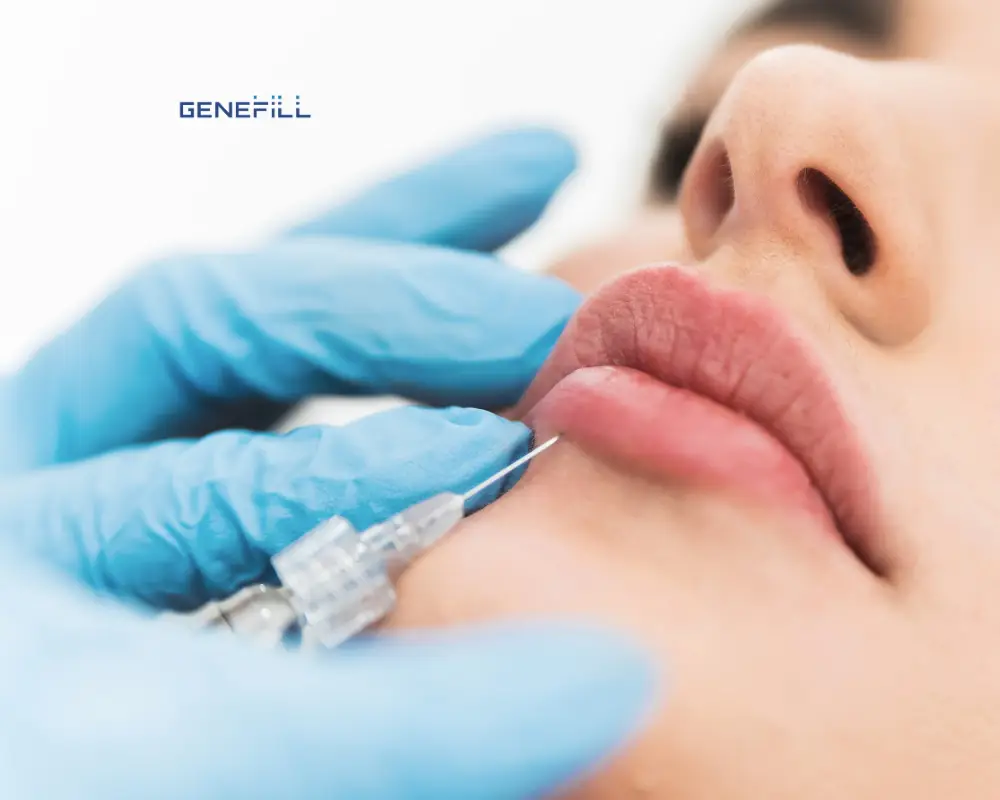
In this zone, the choice of material is paramount. Using a filler that integrates smoothly with the movement of the lower face, such as the cross-linked formulations within the Genefill range, ensures that the results remain natural during dynamic expression, providing a "liquid lift" that mimics the strength of a youthful bone structure.
A New Chapter in Aesthetic Excellence
The emergence of “Ozempic Face” should not be seen as a drawback of metabolic progress, but rather as a reflection of how closely metabolic health and aesthetic medicine are now connected.
As patients undergo significant physical transformation, facial rejuvenation becomes an important final step. It ensures their appearance reflects the same vitality and well-being achieved through weight loss.
Addressing this requires an approach grounded in structural restoration. Today’s hyaluronic acid fillers are designed to adapt to different treatment needs, from restoring foundational volume and contour to improving overall skin quality. By integrating smoothly within the tissue, they support natural-looking results while respecting facial dynamics.
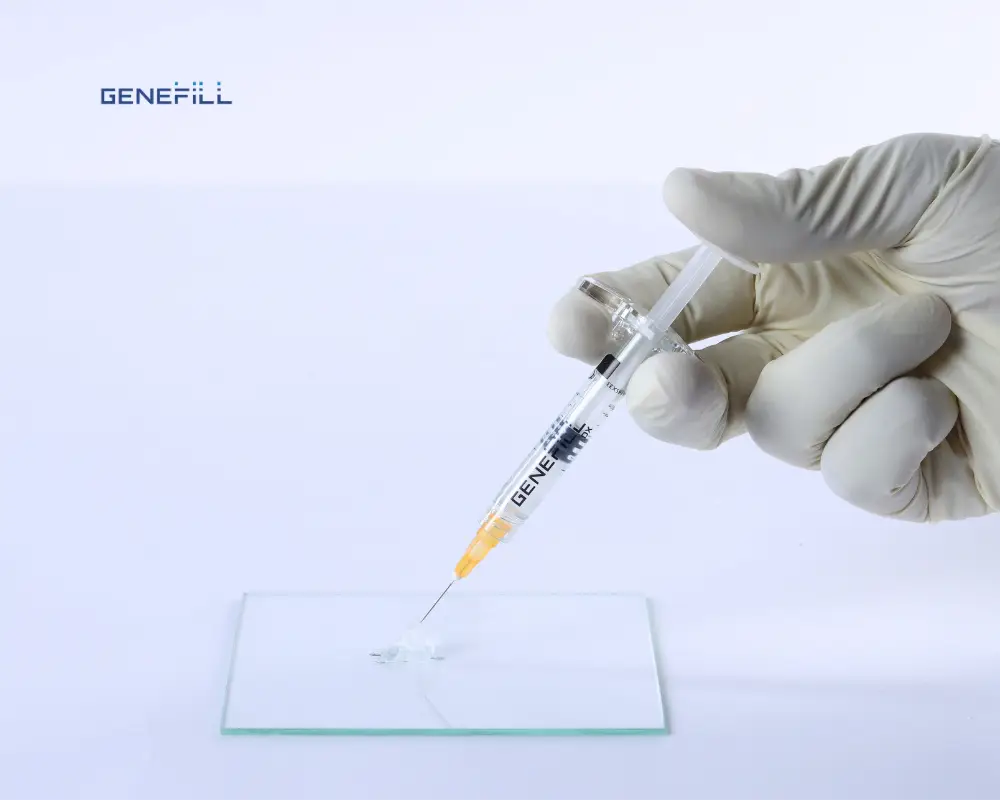
Within this broader approach, biostimulatory solutions are also gaining importance. Hybrid formulations like Genefill DX, which combine cross-linked hyaluronic acid with Dextranomer microspheres, introduce the concept of regenerative aesthetics to the mix.5,11
Together, these options allow practitioners to tailor treatments based on the degree of facial deflation and skin condition, whether the goal is structural support, subtle refinement, or progressive rejuvenation.
The result is a face that reflects the health, energy, and confidence achieved through weight loss, without compromising natural expression.
Conclusion: The Integrated Aesthetic Journey
The rise of GLP-1 medications has reshaped body contours as well as redefined the expectations around aesthetic outcomes.
As this new patient profile continues to grow, so does the need for approaches that go beyond surface-level correction. The focus has shifted from simply replacing lost volume to restoring balance in a way that feels consistent, refined, and true to the individual.
When done thoughtfully, facial rejuvenation becomes a natural continuation of the patient’s journey, one that brings the final result into alignment.
Because the goal is not to change how someone looks, but to ensure they still recognize themselves – only healthier, more rested, and in harmony with where they are today.
Elevate Your Practice
With changing patient needs comes the opportunity to rethink treatment approaches.
The Genefill Professional Portfolio for dermal facial fillers offers a range of solutions to support structural balance, skin quality, and long-term aesthetic outcomes. Contact us to find the perfect solution for your needs.
REFERENCES
- Abdelrahman RM, Musa TH, Arbab IA, Suliman MH, Ahmed EO, Mohamed AN, Musa HH, Jalal M, Gasmallah SI. Harnessing GLP-1 Receptor Agonists for Obesity Treatment: Prospects and Obstacles on the Horizon. J Obes. 2025 Nov 24;2025:9919810.
- Sharma RK, Vittetoe KL, Barna AJ, Takkouche S, Varelas AN, Yang SF, Stephan SJ, Patel PN. Radiographic Midfacial Volume Changes in Patients on GLP-1 Agonists. Otolaryngol Head Neck Surg. 2025 Aug;173(2):360-366.
- Haykal D, Hersant B, Cartier H, Meningaud JP. The Role of GLP-1 Agonists in Esthetic Medicine: Exploring the Impact of Semaglutide on Body Contouring and Skin Health. J Cosmet Dermatol. 2025 Feb;24(2):e16716.
- Nikolis A, Somenek MT, Dayan S, Cartier H, Fabi SG, Avelar L, Franco J, Frank K, Haddad A, Alsufyani MA, Huang J, Prygova I, Safran T. Managing Aesthetic Needs in Prescription Medication-Driven Rapid Weight Loss Patients: Results of an International Consensus. The Clinician Perspective. J Cosmet Dermatol. 2026 Jan;25(1):e70644.
- Ortiz-Flores RM, Escamilla-Sanchez A, Cidoncha-Morcillo B, Mastronardi L, Fontenete S, Garcia-Delgado R. Enhanced Facial Rejuvenation: Biostimulatory Effects of Hylan Gel Dermal Filler DX on Collagen Synthesis and Tissue Regeneration. Aesthetic Plast Surg. 2026 Jan;50(2):707-725.
- Hong GW, Swift A, Corrêa MC, Liang BC, Yi KH. How Does Injecting Filler Into Facial Ligaments Result in Facial Lifting? J Craniofac Surg. 2026 Jan 14.
- Somenek M. Hyperdilute Calcium Hydroxylapatite for the Treatment of Perioral Rhytids: A Pilot Study. Aesthet Surg J Open Forum. 2024 Apr 5;6:ojae021.
- Moradi A, Denkova R, Holcomb K, Rossi A, Ashourian N. Nonsurgical Aesthetic Treatment of the Face and Neck in GLP-1 Receptor Agonist Weight Loss Patients: Experience-Based Considerations. Aesthet Surg J Open Forum. 2026 Jan 21;8:ojag011.
- Lorenc ZP, Lee JC. Composite Volumization of the Aging Face: Supra-Periosteal Space as the Foundation for Optimal Facial Rejuvenation. J Drugs Dermatol. 2016 Sep 1;15(9):1136-41.
- Trévidic P, Kaufman-Janette J, Weinkle S, Wu R, Dhillon B, Antunes S, Macé E, Maffert P. Injection Guidelines for Treating Midface Volume Deficiency With Hyaluronic Acid Fillers: The ATP Approach (Anatomy, Techniques, Products). Aesthet Surg J. 2022 Aug 1;42(8):920-934.
- Ruiz N, Lopez RM, Marques R, Fontenete S. Clinical Outcomes and Safety Profile of a Dextranomer-Hyaluronic Acid Hybrid Filler: A Case Series Analysis. J Cosmet Dermatol. 2025 Jan;24(1):e16653.
- Sundaram H, Cassuto D. Biophysical characteristics of hyaluronic acid soft-tissue fillers and their relevance to aesthetic applications. Plast Reconstr Surg. 2013 Oct;132(4 Suppl 2):5S-21S.
- Arsiwala SZ. Simplifying Injectables for Volumetric Rejuvenation of Face. J Cutan Aesthet Surg. 2018 Apr-Jun;11(2):51-59.
Smart FAQs
1. What is “Ozempic Face”?
“Ozempic Face” is a term used to describe the facial changes that can occur after rapid weight loss associated with GLP-1 medications. It is characterized by volume loss in key areas such as the cheeks and temples, leading to a more hollow or fatigued appearance.
2. What are GLP-1 receptor agonists (GLP-1 RAs)?
GLP-1 receptor agonists are medications (such as semaglutide and tirzepatide) used to support weight loss and metabolic health. They work by regulating appetite and blood sugar levels, often leading to significant and rapid fat reduction.
3. Why does rapid weight loss affect the face?
Rapid weight loss can reduce superficial facial fat compartments faster than the skin can adapt. This leads to facial deflation, loss of structural support, and visible changes such as hollowing, sagging, and reduced skin elasticity.
4. Is “Ozempic Face” permanent?
No, “Ozempic Face” is not necessarily permanent. Facial volume and structure can be restored using non-surgical aesthetic treatments such as restorative facial fillers and biostimulatory approaches that support collagen regeneration.
5. What are the best treatments for facial volume loss after GLP-1 weight loss?
Treatment typically focuses on restoring structural integrity rather than simply adding volume. This may include hyaluronic acid-based fillers for contour and support, as well as biostimulatory fillers that promote neocollagenesis and improve overall skin quality. The goal is a "hybrid" approach that addresses both deep structural hollowing and superficial skin texture.
6. What is the recovery time for these treatments?
One of the primary benefits of using advanced dermal fillers for volume restoration is the minimal social downtime. Because these are non-surgical, minimally invasive procedures, most patients can return to their daily activities immediately. Some minor swelling or localized bruising may occur at the injection sites, but these typically resolve within a few days. For those with a high-profile lifestyle, this "lunchtime" restoration offers a significant advantage over surgical alternatives, providing immediate results with a high safety profile.
.webp)